
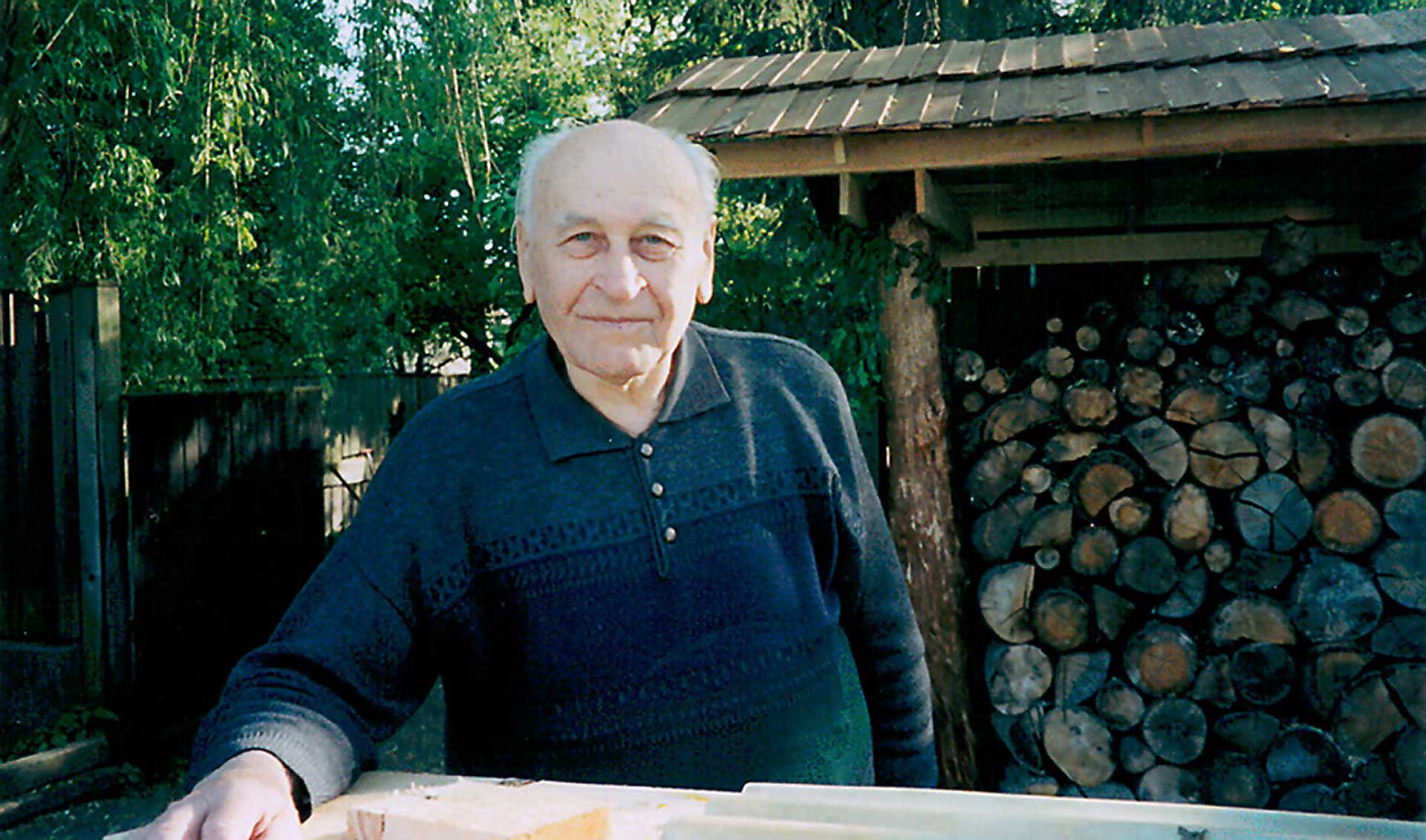
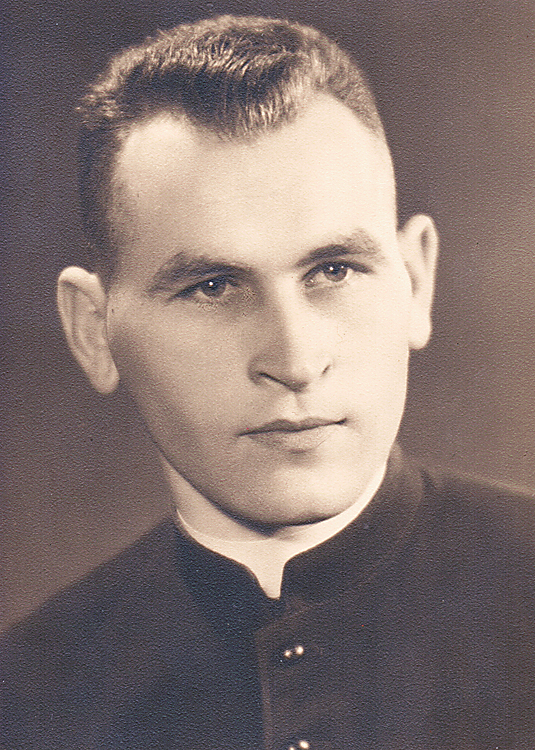
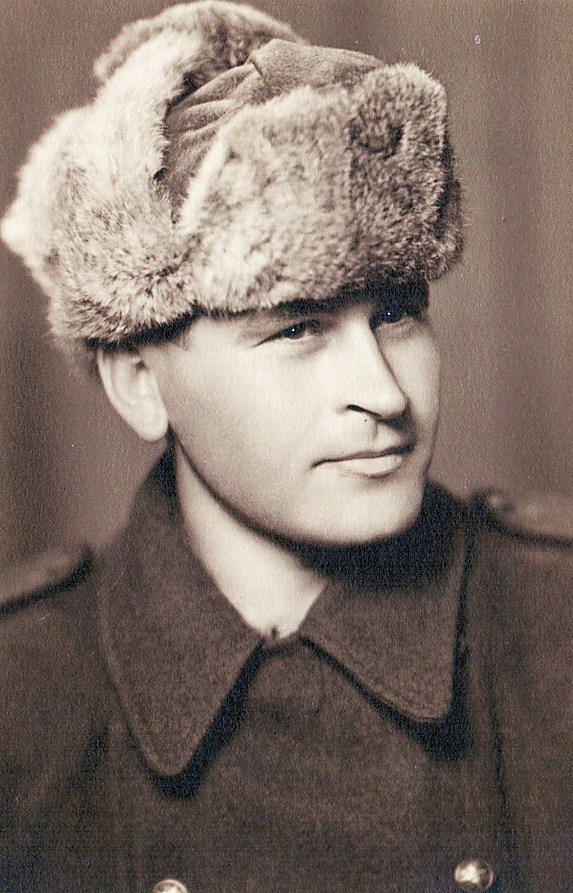
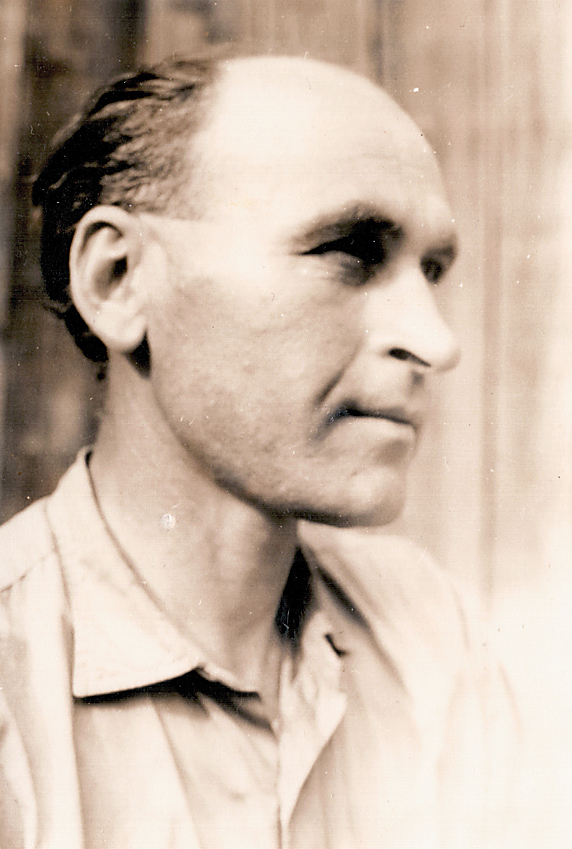
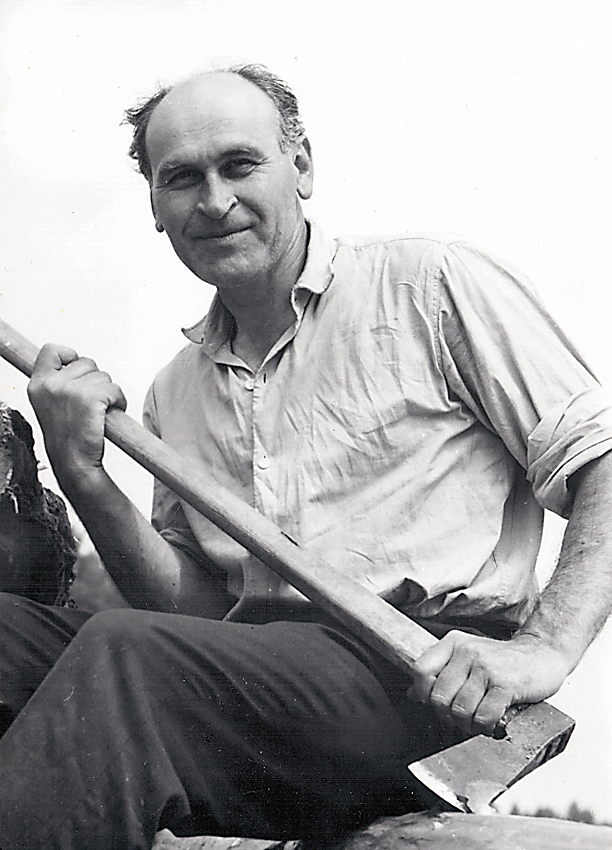
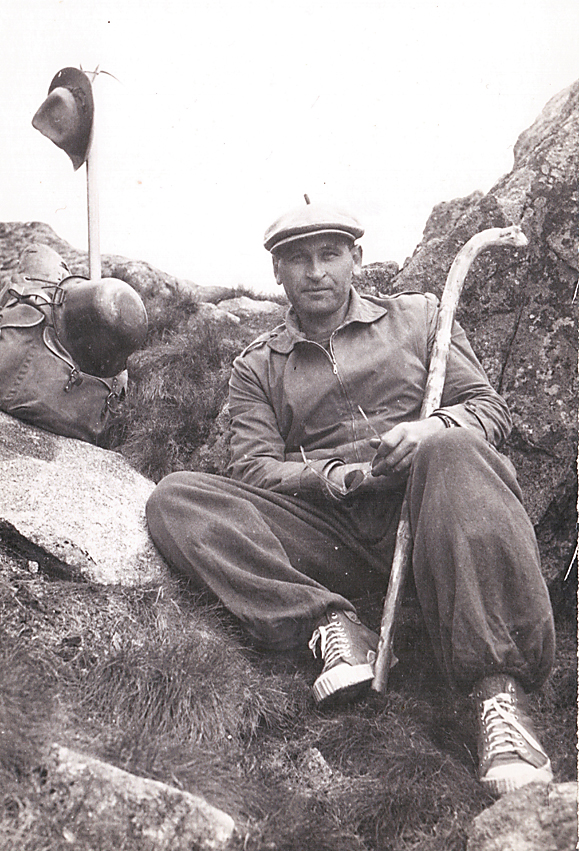
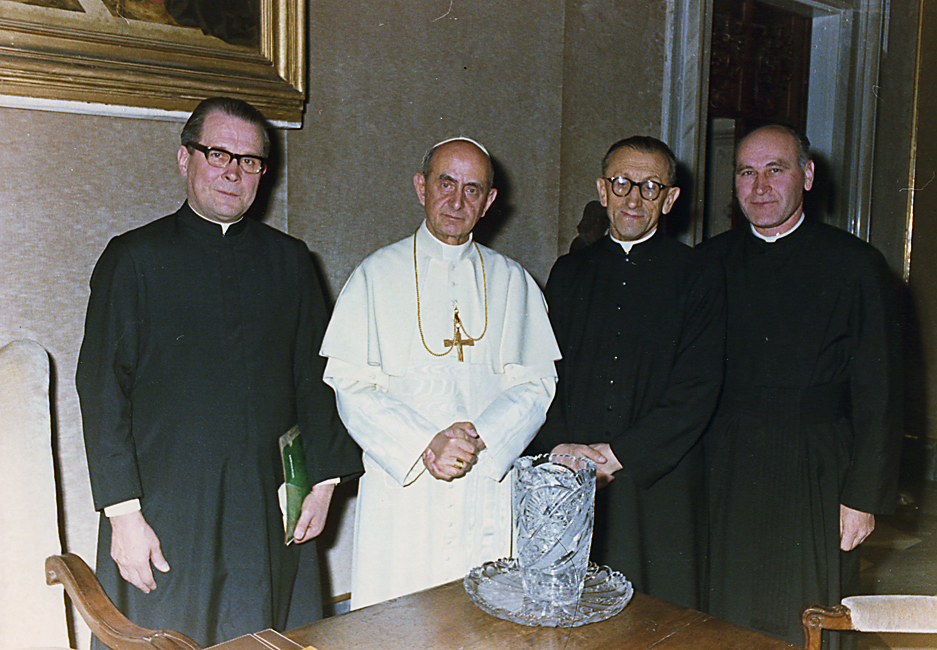
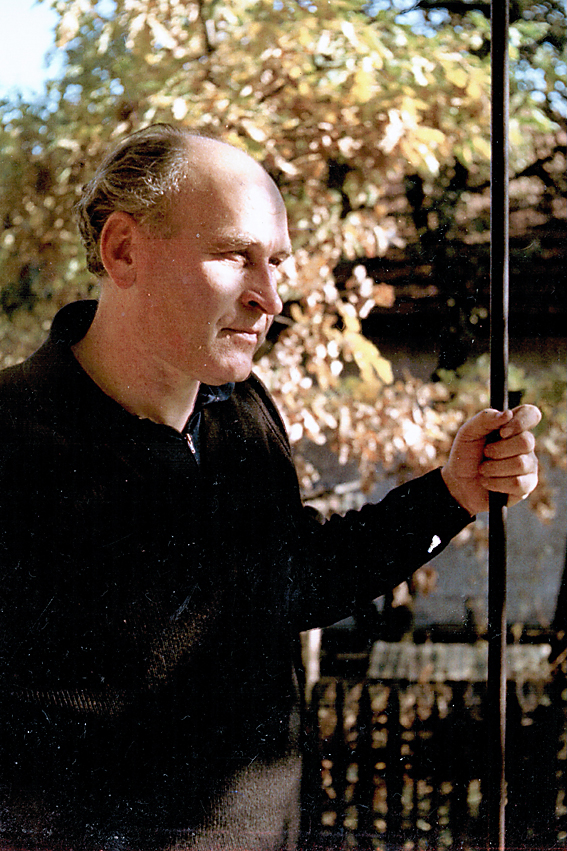

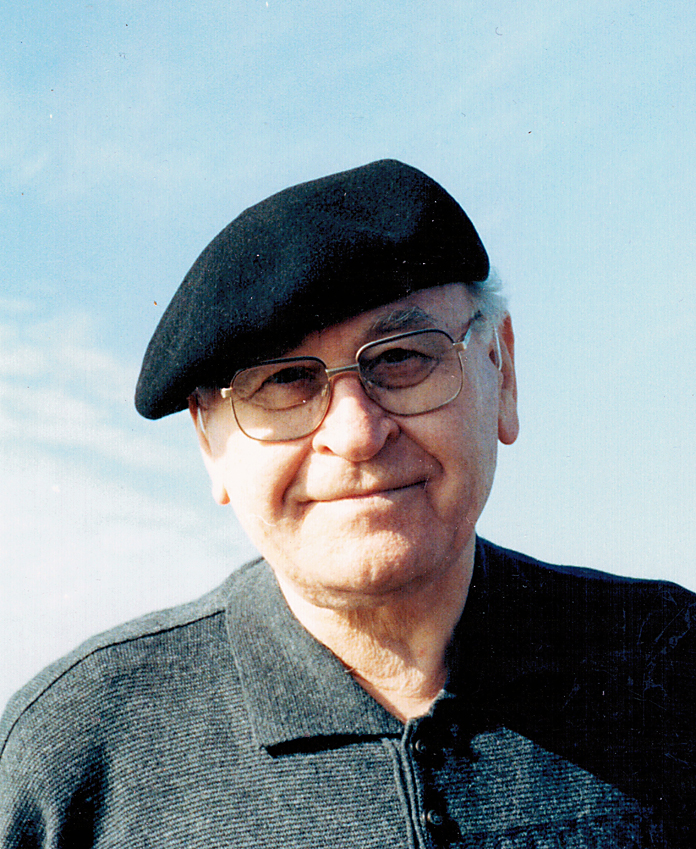
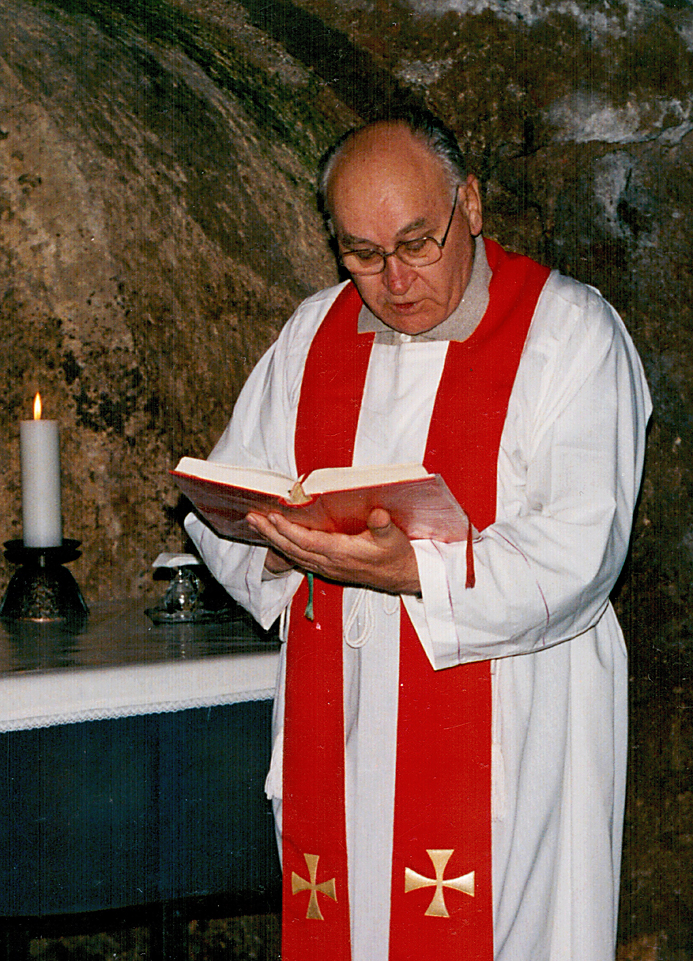
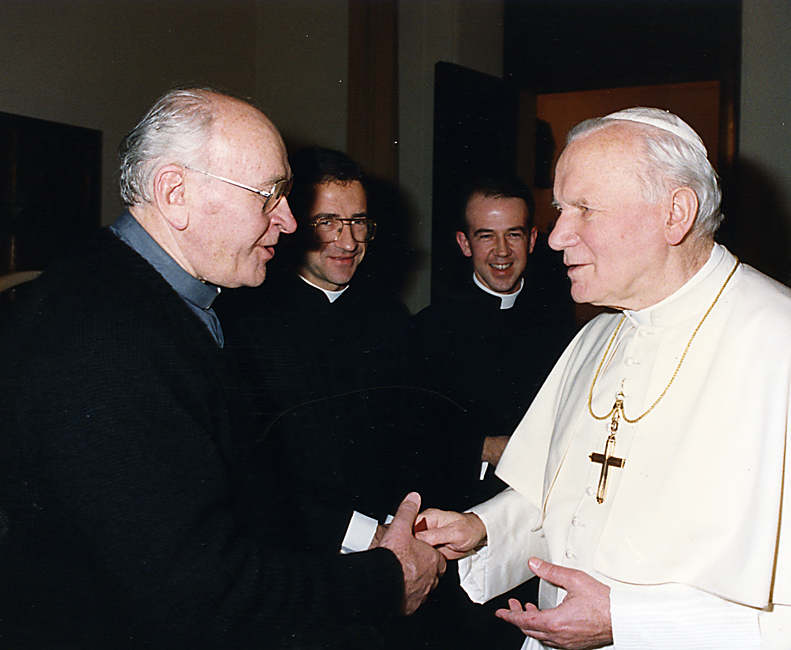
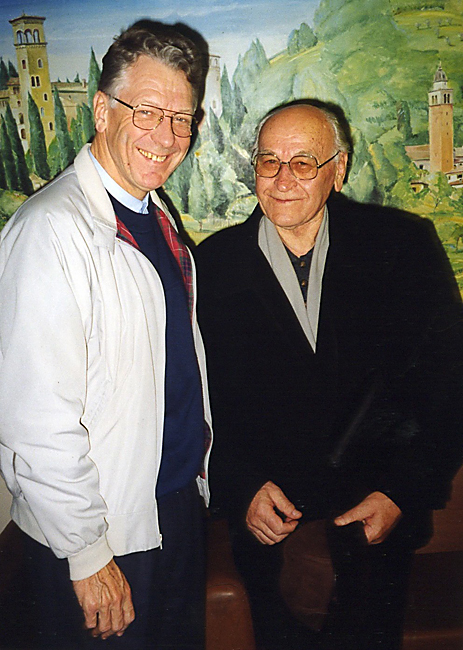

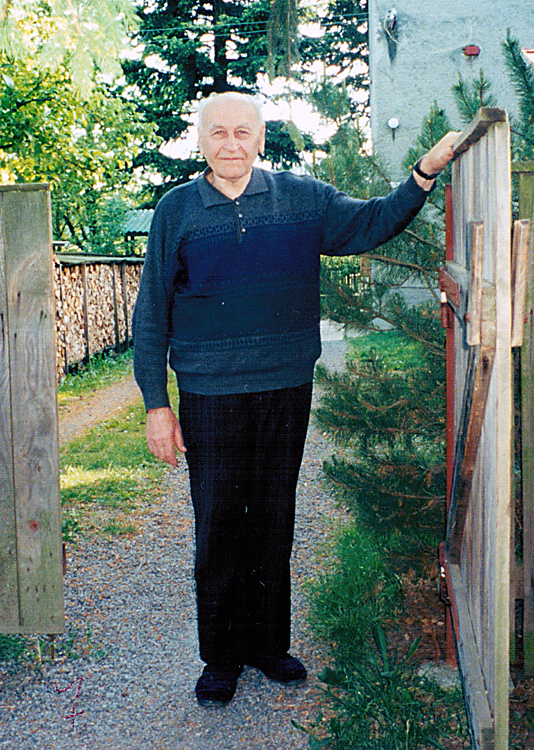
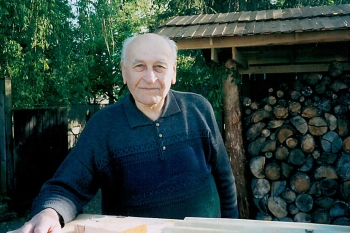

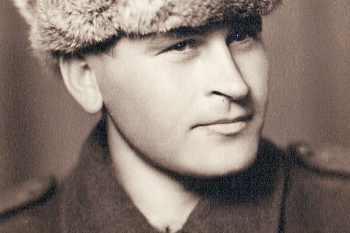



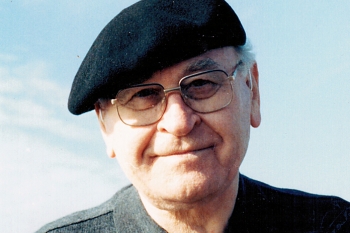
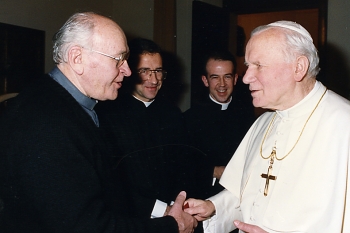


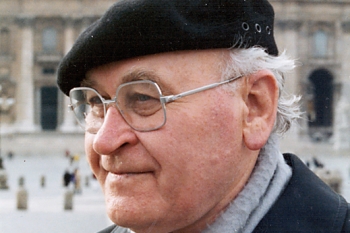
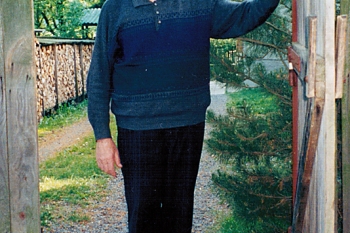
When in 1991 an editor of Krajanský pozdrav, salesian Vojtech Zeman asked Ján Augustín Beňo, that time seventy years old priest who influenced and led a larger group of faithful, what were his plans for the future, his reply was:
To know, without delay and the thoroughly, what plans God has with us in the current situation.
We can say that readiness and perseverance in seeking God's will and her persistent and responsible conduct were the main characteristics of dramatic but a blessed life of the salesian priest, founder of the movement Nazareth.
He was born on October 12, 1921 in Prestavlky.
At that time it was a village with a small number of houses build around the church. The village is located in Žiar valley in central Slovakia surrounded by a mountain range Kremnica and Štiavnica. It the past the village belong to a Benedictine abbey established in the Holy Hronský Beňadik. The memorandum of 1075 says about the establishment of that monastery. The Benedictines, as we know, according to its motto "ora et labora" taught the people that they manage, to pray and work. In these characteristics, particular in diligence, people from Přestavlky really excelled.
Family Beňo is in Prestavlky one of the oldest and the most numerous. Records about the family are in the first parish register in Trubín. The oldest registered great grandfather of Don Beňo is Juraj Beňo, whose son Ján, married in 1768, had ten children. His mother and grant mother’s maiden name was also Beňo.
His father Ladislav was a cheerful man, with lively and dynamic character. He had a sense of humour and was hardworking and courageous. People say that he was also very strong. When he downloaded heavy oak on the courtyard, which he brought from a wood, not only the earth rumbled, but also covers on pots in the kitchen jumped.
Despite his sanguine nature he was sensitive to the most important values in the family live. When he heard gossips that a local teacher went after his wife, as he worked in Argentina, he did not believed it, but he went back home to see whether it was true. He did not hesitated to undergo long and costly journey from America, to by certain of mutual matrimonial fidelity, which was sacred to him. And when he saw that it really was just talk, he did not regret what he spent and happily went back to his work.
His mother Veronika was calm, sober, smart and consistent in work. She was a family person, cheerful, attentive in needs of others, although she had poorer health. She was just a simple woman, but she could quickly orientate in a situation. She was also a very religious woman.
If ever a smallest tension arosed between parents, the mother took the children aside. When it passed, the father tried to settle everything with joy in the family. Sometimes he took his Veronika to dance in the kitchen. The children enjoyed that the clouds have gone and the sun shone again.
Janko was born as the third of six siblings. That time mother was twenty-three and father twenty-seven. The first two he did not even know. They have died as children. When he was twelve he also passed a health crisis which he happily overcome. It was attributed to a certain blood relation of his parents.
Two of three younger siblings, the Lord God called to him also in childhood. Only younger brother Jozef stayed alive, he has remained in Přestavlky with his family. Don Beňo’s brother Ferko died in his presence. Thus, already as a young boy the Don Beňo saw death. Possibly, also this affected his responsibility for the salvation of his own soul and the souls of others.
His parents were poor. Father, all his life, worked as a labourer and had a small field at home, cows and other smaller animals. The family lived in one room. Indeed, when the winter was very cold there were also calf, chickens and their other small animals.
When the father went to work to Argentina (that he incidentally returned poorer than he went there, his mother had to send him money for the return journey), Ján was at home the oldest of the children. He helped on the field and with the animals. He pastured their cow on a pasture outside the village. As a twelve he had to kill a calf, or to earn some money for the household. Along with the guys, he worked in a forest. He was often forced to miss school because of the work. And so it happened, that he had to repeat a year. But this was not taken tragically. He stayed among their classmates, because in the village was just one class for all years. Later pupils were divided into two classes.
Peers remember that Ján was a meek, humble and good hearted man, rather serious and shy. He did not speak a lot, but when he said something it was thought-out. This does not mean that he did not have a sense for fan. For example: Village had a night watchman. His task was to trumpet at certain time at night, which was also evidence that he did not sleep, but he guarded. Because he was nearly blind, he fingered the time with fingers on the watch that he had at home. Well, those his clocks attracted boys and Jan among them. They speculated how to confuse the uncle. One night they slipped unnoticed into his house and move the hands on the clock forward. When the uncle went as usual to check the clock, although it was a bit strange how time flies, he trumpeted an hour earlier. We do not know what punishment the young offenders got when things came to light, but it is certain that they remembered that it is not allowed to make fan of elderly.
Youth in the village played plays and also children contributed to it. Since childhood Jan had gift of speech. After a play he gave his talk.
God gave him also a musical talent. Since the first class he learned to play the violin. He made people happy also by playing small accordion in the village.
Parents sheared responsibility of Jan’s religious education with pious environment where he lived. Special role here played grandmother Zuzka, who lived with them in a house in a small back room. In the morning, when mother was on the field or took care of the animals, she prepared breakfast and supervised his morning pray. It consist of repentance of certain parts of catechism such as Ten Commandments, sacraments, main truths and everything else. Once it happened that Jan, already hungry, turned his head toward the meal that grandma prepared, he was hit by dish-cloth on mouth with such verbal accompaniment: "Why are you turning like a wolf?! Count with me! "And then followed twelve tribes of Israel that Jan remembered ever since.
However, his religious education was not only repetitive verbal prayer. An event from his childhood is events of it. When Kukučková Anna, the girl from Prestavlky was five, her mother died. Nine years old Jan went with his mother to comfort her and said: "Do not worry, Anna, God will look after you." You can see that since childhood Jan sucked honest and the true faith of his surrounding and especially mother’s.
Don Beňo said about his way to a religious vocation this: "As a boy I knew only that I should not stay at home. When in the school investigated what we want to be, I wrote that I want to be a woodsman, because he was somebody in the village. He had a gun and those who went to steal wood were afraid of him. Later, I had grown to love our teacher Suchanek, who was a good religious man. So next time I replied such question that I wanted to be a teacher. Later in the life I had both by Divine Providence. But that time I could not think about studies because I repeated a year, and I finished elementary school in the sixth grade. Considering the work that I had to do on our small farm. When I was fourteen, I was restless. I more clearly felt that I wanted to go away from home. That time Laco Gáfrik, who was a missionary SVD in Nitra, talked to me enthusiastically about where he is. Than I said to myself, when he could be like this, why I could not be. It had deeply affected me that I went to my aunt, who had envelopes from France, it was unusual that time, and I wrote my application to SVD in Nitra. I thought that there I will have some quittances at least. But I did not know what I want to be. When missionaries than missionaries.
But they wrote back from Nitra that they cannot accept me for the lack of space, and advised me to apply to some other religious order. I was disappointed.
Even at home it was not easy. Father did not want to hear about such my future. He was saying: ‘Janko, we will buy oxen, and we will work on the farm. I do not want to have any lords in the house.’ But eventually he agreed. I do not remember how the back page of the magazine ‘Salezian News’ got into my hands. There was written: 'Young men who feel to have vocation call on Salesians on those and those addresses ...' Later that day I wrote to Šaštín. They answered me to come for exam on May 3 to Hronský Sv. Beňadik. That was in 1935. "
Don Beňo’s younger peer Anna remembers this period like this: "We often met with Janko at pasturing cows. We usefully spent time, and we were preparing for entrance exams. We both wanted to go to religious order. We revised various subjects such as mathematics, Slovak ... Jan always wondered how to use the time well to get benefit for the future. He was simple and practical."
Don Beňo continues: "There was a pilgrimage in Sv. Benadik on the day of entering exam. I went there with my mum on foot one night before. It was thirty-five kilometres from Prestavlky. The next night we went back again on foot. After holy confession, holy Mass and procession the exam began. The director Don Sersen came from Šaštín because of it. When he examined me from the subjects, he slapped me on the back. (I had strong figure because I was working hard manualy since my childhood.) He started chasing me around the table, but I did not get caught. I tried to run away once to one and once the other side. Then the director slapped me again on the shoulder and said: ‘‘These we need more.‘‘ And I was accepted as a Salesian aspirant in Šaštín.
When I came to this institution and I unpacked, I was sent to the courtyard. I saw boys running. I did not know anyone, and I did not know what to do, so I just stood in the corner. Don Evinic came to me and said: 'What are you standing? Why are you not playing? Go!' It gave me courage, and I immediately mixed among the other boys.
Then my study at gymnazium began. Our school was private, so annual exams in all subjects we took at Franciscan gymnazium in Malacky, it was the closest. But this order did not have so much vocations as Salesians. Therefore, they let many of our classmates did not past annual exams, in my year there were eighteen out of thirty. Then they offered them to study at their gymnazium, there they were often excellent students. So it happened that also I did not pass the annual exam in the first year and I had to return home. Our director Don Sersen did not give up and look for other options. He wrote me that I can do the entrance exam in Kláštor pod Znievom. If I feel so right to go straight into the third year. But father was very against it. He said: 'See, I told you ... You be ashamed. You will go nowhere! "And so it went like that every day. It was enough that he looked at me, and I crawled behind a corner. There I pondered and prayed ... I was fifteen that time. When my mom saw me so sad, she encouraged me: 'Do not worry, Jan, you will go, you will go ... "
Mother's words eventually became a reality. And it must be added that also when my father, as forty-four years old was laying on his death bed because of strong kidney inflammation, said: "Well, I'm glad that the boy is there ..."
Jan returned to Šaštín and happily overcame the first serious threat to his vocation. He continued his studies at the gymnazium with only difference that annual examinations took in Kláštor pod Znievom.
These first five years, which he spent as a student in Šaštín at Our Lady of Sorrows, was also marked by building a true devotion to Her, who is the patron of all vocations. Don Beňo remembered that a few years in his youth Rosary helped him to address the issue of chastity and vocation that he considered as a free gift. Since his fifteen to seventeen he prayed all three parts. There was ‘his’ statue of the Virgin Mary in the side corridor of Šaštín temple where he placed a rolled-up paper with his resolutions. Also this way he prayed Her for help and protection.
However, another difficulty in his vocation came. In 1940, before the end of the fifth year at gymnázim, he should be send away because his parents could not pay the fees, and also because one of the professors unfairly sued him. This situation Don Beňo recounts like this: "The director called two of us, me and Jula Holečka and told us that he was letting us go because we did not pay. Holečka shook his shoulders and went home. I wept. I began to take off all money from my purse, even small, and put them in the director's office on the table. Even I turned my pockets out. I did not cried when my father and mother died, but when my vocation was in a play, I was emotional, and I was very sorry. So I think God gave me undeserved and also a kind of indefinable love for profession. I wanted to go for something very much, even though I was not certain where exactly God leads me.
When don Sersen saw it, he had mercy on me and said: 'Well, well, go ... You can stay. "
A few months after this, Don Beňo started noviciate in Hronskom Sv. Benadik in the school year 1940-41. During it, the candidates for the life in the order should make sure what God’s plan is for them, and leaders should find out whether there is hope that novices will have necessary skills to work according Salesian charisma. Especially, they were tested at their adaptability, humility, detachment, but also ability to work and do any kind of work.
He recalled two formative situation from that year. Once he was tasked to sweep the monastery corridor. True, they had to do perfectly this work, particularly in novitiate. And he did it so well because he was detailed in everything. But assistant appeared and "unnoticeably" spread filings through swept corridor. This was followed by a rebuke for sloppy work. If a "string," so Salesians called their novices, rebel in a similar situation, it could possibly happen that he will not continue the novitiate. But Jan was calm and swept the corridor again. Certainly, not only because this move of his assistant he noticed ahead.
The next similar case happened as they went for a walk with novicmaster Don Babiak. Jan was wearing a nice hat that his mother bought for hard-saved money. Well, during the walk novicmaster liked violets, and he took a few of them with roots to plant them in their monastery garden. He uprooted them but he did not have anything to carry them. He looked at the boy and said, "Beňo, you have a hat, let us to carry them in it." Jan did bother when he had to give up such a precious gift. But he said that obedience is more …
Other times novicmaster said: "Beňo, you're so serious, you had better gone to the Jesuits." So, he was given a task to tell a joke every day at peeping potatoes. It was just the beginning of June, the month of the Sacred Heart of Jesus, when he gave to his companion at work such a riddle: ‘Do you know what is the sweetest in the world?’ The answer was: flea, because people licked their fingers before they caught it. The next day they had a lesson with catechist, who wanted to bring their devotion to the new month and coincidentally asked boys the same question: ‘Do you know what is the sweetest in the world?’ Jan’s companion at peeling potatoes said: "I know! Flea. "" Sit down, you stupid! The sweetest is the Sacred Heart of Jesus! "Jan was bent behind the bench, because unintentionally he caused this situation.
Salesian novitiate, it was not only exams but also days full of joy, study, work, family spirit, which reflected in behaviour of adepts for this kind of religious life.
Don Masný, who was Don Beňo’s relative, recalls: "As a young, when I came with my father to St. Hronský Beňadik to apply for study to Salesians, my first impressions were that everything was very narrow. Abbey walls were grim, and when twenty men with short hear cut and serious faces came out of the chapel, because they had spiritual exercises, I wanted to escape. However, suddenly one of them came to us and said to my father: 'Welcome, brother in law!' It was Jan Beňo. This his warmth staid in me as an unforgettable experience. Then I was not longer afraid to go to Salesians.
After the novitiate and the first temporary vows in 1941, Don Beňo joined so called a pedagogy school in Trnava. There, he, as a student of sixth grade, continued last three years at gymnazium. There was one lesson of philosophy and pedagogy in the curriculum every day. They were already considered as clerics. They have completed study of philosophy and pedagogy at the same time as they graduated from gymnasium.
The time that Don Beňo spent in Trnava, his older brother Don Ernest Macák recounts like this: "As a student of the sixth year at gymnasium, he was 20, wrote his first pamphlet ‘Four wheels.’ Already there you could see that he had writing skills. "This paper speaks about purity of heart, regular holy communion, love for the Mother of God and love for the mother Church as the foundation that moves us forward in spiritual life. Don Beňo wrote this paper with such love for the young that can be seen in words: ‘Dear friend, you also have to move towards your destination on four wheels. Remember, if you lose only one of them on your life way, you will not come home, you will not come to homeland heaven."
After graduating and finishing philosophy and pedagogy followed three years of teaching experience in Šaštín. As soon as Don Beňo graduated with distinction from gymnasium in Klaštor pod Znievom in 1944, he returned to Šaštín, that time as an assistant of aspirants, who were preparing for novitiate. He was responsible for about sixty 12-14 year old boys. He took care of their after school time on yard, at work or hobbies, and He supervised in bedrooms before everybody fell asleep. In addition, He taught history, geography and social education in lower grades, twenty-four hours a week. One of his students Don A. Mastný said about him: "Whenever he came among us he was smiling and optimistic, he was genial towards others."
Other testifies: "Don Beňo used all his free time for studying. He translated Caelestie from French, a very good dogmatic written by Lahitton. Don Beňo was a man who loved the Church. He did not spend time for hobbies, but every moment He used for the good of the Kingdom of Heaven. He wanted to prepare well for his future pastoral work. "(Ing. J. Remenec)
This year was marked by direct contact with the horrors of World War II. In April 1945 the front crossed Šaštín. Because retreating Germans were taking people with them to work in Germany, the director of the gymnasium in Šaštín decided to send the boys home. There were destroyed railways everywhere except central Pohronie and other transport was not working. Therefore, some boys and Don Beňo with them were hiding in peasant Planka’s hay in nearby village Štefanov. When the air-raid warning, they could go into a pit that Planka had for such cases in the yard. They survived transition of German army, but they also had to survive transition of Russian troops. Residents helped as they could, they also were hiding women from their homes. Don Beňo was in civilian clothes. He wore a coat after some railwaymen but that could become fatal. When a Russian solder saw him, he thought it was a German uniform and wanted him shot. Don Beňo lived this moment as his last and handed himself over to the hands of God. God was preparing him for such situation since his youth. When the soldier pointed the gun on him, commander came to the soldier and said: "what are you doing?!' Purported German was saved at the last moment by God’s Providence. And once again he could be killed when the carriage, which he pushed, was hit by grenade. The Lord had protected him also in that case.
After the front past, those guys, who stayed there, had to be available for the removal of various consequences of the fighting, such as burying the dead soldiers, disposing of wounded horses and burying them. Horrible was to see both of them.
Thus, the first year of Don Beňo’s teaching in Šaštín was closing. Because he did well in Šaštín, superiors send him to clerics in Trnava for next two years.
From this period of two years, we have following testimony about him: "Don Beňo as an assistant was very dignified and had great popularity and esteem, though he was not a priest yet; not only because he was well built figure. It was his natural authority that help us to obey him. He did not have to warn boys for bad behaviour or negligent study. He had great respect also due to his knowledge. In addition to the care of us, he always found time to study. He was very diligent. He studied in order to have permanent knowledge and could use it in life. He took notes from each book in capital letters. He studied also challenging papers; there he drew the right view and became an outstanding thinker. He knew interpreted very well even difficult things. When talking, he spoke smoothly, linked connections and expressed deep thoughts.
He got people to be enthusiastic also because he always noticed what are their characteristics and talents; and he helped them to develop them.
And diligence? That we all could learn from him. He did not hesitate even a while. Cannot be said that he did not like to do some things. It was visible that he lived for the Lord God and did all for God's glory. Therefore, we could always rely on him.
He was very good as a man. We all liked him.
He perfected in all that could helped him to become a real spiritual father, a priest; who would be able to serve the Gospel to others in an acceptable form.
He did various activities for God's glory. From sport, he loved volleyball; he played it well.
He founded an orchestra, which he conducted very well. Here again; his accurate job, as always, and self-control was proved. We played pretty hard things; for example Egmont by Beethoven, compositions by Strauss and other classical authors.
He had an authority also here. He did not repeated twice what he said, we obeyed him immediately. Not because he would push us to do something. We did not know him like that. He said how we could do things, but when someone had a better idea he took it. He never imposed anything.
Everywhere are people who cannot bear contradiction, but Don Beňo was not like them.
He was able to inspire others to work for the kingdom of God. He could inspire and attract. Simply, Jan Beňo was a person who you could not leave without coming back "(Don Zoltan Schmidt).
The orchestra, initially composed of various instruments, began in Šaštín and had its own history. Mr. Hudec; a teacher from Psiar, who gave him a violin lessons; developed Don Beňo’s musical talents during novitiate. Don Beňo got boys together in Šaštín in 1944, during the war. German soldiers were accommodated in the building near monastery. One colonel saw them playing and he really liked it. He was very generous and bought them the entire orchestra for about thirty. They trained whit great enthusiasm. When orchestra together with the conductor moved to Trnava, they played classics (S. Z. testimony). Later, they also had brass band, where Don Beňo himself played helicon, in particular, but also other instruments.
When they were waiting the visitation of main catechist Don Tirone from Turin, the orchestra was practicing very hard to play him nicely. It was in the afternoon, when boys started playing. They finished the first composition and Don Tirone said: "L'armonia degli strumenti è bella, si, si ... quella dei cuori Ma è di più. Dove sono i Ragazzi? "(Harmony of instruments is beautiful. Yes. But harmony of hearts is more beautiful. Where are the boys?) So, the concert ended. They all stood up and went amongst oratory boys on the courtyard. Don Tirone belong to the older oratory boys, who had known Don Bosco; and in gentle way, he pointed out what Salesian should do in the first place.
More artistically talented boys met in the pedagogy school in Trnava. Čambál and Kmotorka were particularly good in music. Literary talented were Bokor, Durica, Haško. These three started publishing the magazine ‘Bells’ in Šaštín. In Trnava, they together with Don Beňo established a literary club "Bernolák". There they said their poems, red reflections and sometimes vigorously debated. Don Beňo held idea that art cannot be such autonomous to do not have a higher goal. The truth should be administered in a beautiful, attractive way, in order to achieve the good. Therefore, literature, written by those who know the Lord, should be a kind of sermon; or, as Jonah Záborský said, it should "admire virtue and abhor sin."
As twenty-four years old, he had written a biography of Blessed Augustus Czartoryski. Maybe, in this biography, Don Beňo went through his own difficulties in vocation. Czartoryski was a model of humble and perseverant man, who went towards his goal through many difficulties, such as disapproval of his father and longer rejection from Don Bosco. Perhaps, because of this similarity, Don Beňo has written this book so convincingly and wholeheartedly.
Salesian Theology School was in Sv. Kríž nad Hronom, at that time. Don Beňo joined it in September 1947. At gymnasium, he liked history, geography and biology; but at theology, his the most popular subjects were dogma, morality and Scripture.
There, Don Beňo was active even while studying. He led Marian group Immaculata that aim was to deepen spiritual life. At meetings, Don Beňo brought up a topic vocations. His goal was to understand obligation to live the life that God designated especially for each of us. In fact, St. Augustin has said to a person who seeks to worship God in a vocation that is not from God, that "you run well, but out of the way", which can seriously threaten your salvation. Similarly, Don Bosco, a founder of Salesians of Don Bosco, taught his sons.
This topic caused blustery discussion at Theology School. A considerable part of the seminarians was favourable to a view that in this case one has complete freedom. It was a sign of liberalism and search for an easier way, which in the near future, when fidelity in vocation was exposed to a large and sophisticated attacks of the world, brought in some cases not good fruit.
Director Don Valábek wanted to have order in the house, one evening after the ‘Good Night Talk’ stood on a chair and forbade any discussions on this topic.
However, an interesting thing hapened. "Atti del Rettori Maggiore" (Acts of the Rector Major) came from Turin where Don Ricaldone stated that, he was very ashamed of those who in the case of vocation denied opinion of Don Bosco and preached other theories. This was especially case of professor Panzaras at the Salesian University in Turin. After this statement, the Rector Major dismissed him.
Although, the guidance to the discussed issue came from the highest place, in Sv. Kríži nad Hronom could not be known for obvious reasons.
Love for vocation that Don Beno received as a gift from the Lord was to be put to a test, the third in a row. Although, he already had perpetual vows, Don Sersen called him and told: "You're still roaming in the oratory ... you will write the test of morality. Even if you know perfectly, I will not let you past." Surprised Don Beňo did not know what was going on. In the following days, the educational board voted and the result - Don Beňo was to be expelled from theology. When Provincial Don Bokor came to the school, once a quarter, seminarians had personal conversation with him; he found out that oratory, that directors complained about, Don Beňo did in obedience, and subjects he mastered with distinction. He called the director, and after a talk with him, cleric Beňo remained at theology. After this event, one episode from the childhood, when he was suddenly beat by boys, came to his mind. He understood that the Lord has been teaching him to receive undeserved punches since his childhood. And those were a lot in the life.
Don Sersen was later sorry that he behaved like that towards him; and he found certain form for apology. He asked theologians Beňo for his notes from spiritual reading to prepare himself homily.
It should be mentioned that even during his theology study, Don Beňo was writing. He was taking Don Bosco’s ideas from Memorie biografiche by Don Lemoynea, and he wrote brief reflections and applications to them. We know them as Echo of Father's Words, in written form and audio record.
Once, when brother priests asked Don Beňo, who out of directors and professors were example of different virtues during his religious formation and theological study there, he said that everybody was some sort of example. He mentioned some of them:
"First it was Don Hlubík, a man who could not upset. Once, Don Mešťánek expelled oratorians from Orathory, who Don Hlubík liked very much. Don Mešťánek told to Don Hlubík that he will not let them come, that he yell at them and closed the door behind them. And don Hlubík said: 'No, no, no, I would not do so.' That was all. He gained self-control and was hard working. He served Holy Mass, even he has legs so sick that others had to hold him. He was humble. On his desk was a stone big as a palm. He brought it from building site in Miletičova in Bratislava. There between bushes was a paradise of local lots who rioted. When they saw two priests walking around it, they felt that somebody wanted to take the place from them. So, Don Hlubík was hit by the stone into his back. He was not angry, but he said: ‘Don Šimončič, it is good start, I will take it in remembrance.' And he used it as a paperweight on his desk until the end.
Then it was fearless, enterprising and above all principled Don Francis Sersenn, who belong to the brothers that brought Salesians to Slovakia. It was an uncompromising man, maybe sometimes hard to others, but I thank him for a lot, also for any inconvenience that he caused me, when they wanted to expel me from theology. He liked me and I liked him. I remember his ‘good night talks’, you know, he was a man who had something to say. He led everything and gave it spirit. He acted diligently and persistently. He came of a family that abound in spiritual vocations. At the funeral of his mother, among the children and grandchildren, who attended, were forty priests and nuns.
Don Babiak was welcoming and warm-hearted, but also demanding and he had pedagogical talent in bringing up novices. He attracted by his simplicity, clarity and a good heart.
I honoured enterprising and out of love to the Church risking Don Ernesto Macák. Later, when they were taking the youngest brothers from Podolínec to Reservoir of Youth to "retrain" them, he was deeply moved by this intervention aimed to destroy the order. He felt so responsible for their future, they would not get lost and remain faithful to their vocation; therefore, he escape from Podolinec, travelled to them to give them instruction and sacraments. Then he returned to Podolinec again.
And then there was Don Taliga who came from Italy where he studied theology. Directors were reluctant to his departure because we did not have enough professors, but finally they sent him. Italians said that when we returned him, they would give us three professors in instead of him. He was stunning, he had two PhD and yet he was humble and hardworking. For example, he had cut down wood in the convent Sv. Kríž nad Hronom and brought it to priests by the door, to be ready for heating. In the park, he dug gutters, removed roots and whatever was needed. He travelled by bicycle wherever he could. He also had a great sense of humour. To me, he had a special understanding. He knew what I was going for and helped me. When I was writing ‘Echoes of Father’s Words’ in Sv. Kríži nad Hronom, he gave me a key of his room, to have access to the bibliography of his large library. During the war, he had done some heroic deeds. When there was shooting from the mountains towards Kozárovce and Psiare, people fled into the fields, many were wounded and there was no help. Don Taliga collected them and drove them to a hospital in Zlaté Moravce on pram. He endangered himself. He was an admirable man. "
In the beginning of 1950, peaceful preparation of theologians for their priesthood in Sv. Kríži nad Hronom disturbed the news about church and religious order leaders concentration. The institution in Sv. Kríži nad Hronom was taken by the government, and salesians could be sent away ftom it any time. They were waiting what would hapen. At night from 13 to 14 April, all members of male religious orders, also salesians, were taken into concentration monasteries.
At that night, when a bus drove Don Beno to the dark, he felt emptiness in his soul. He examined his conscious whether it is indifference towards vocation, because all current dreams and plans had vanished. However, when he noticed courage to defend his life with everything what he achieved and what he expected, he stayed calm.
After that, all Salesians stayed ten days in Šaštín, four month in a concentration camp for male religious orders in Podolínec and four mouth in a work-technical camp (WTC) at different places in the republic.
All this period was marked by big uncertainty what would happen next. Uncertainty of a prisoner, who did not know whether he would wake up next morning, and uncertainty of a monk, who did not know how he would live his vocation in the future. At a political instruction in a WTC, one brother asked, certainly on behalf of all: ‘How long we will be here?,’ he got an answer, until they leave thinking of the Church. This uncertainty grew in each intervention of persecutors. Some brothers did not lose the hope that Almighty Lord did not allow to destroy His work, and that brothers would return to a previous sort of life. Others did not believe to anybody and anything and slowly inwardly and outwardly were leaving their vocation. Ones because of satiety and hopelessness that there cannot be done anything; others because of fear of life full of difficulties; others were attracted by illusion of comfortable life outside the order. Some of them become a talebearer.
There were also brothers, who also felt uncertainty about the future, but they trusted God that if He allowed it, He had an exact plan for them. In the situation that everybody saw as very bad, unfortunate, maybe something that even God cannot manage, they believed that there is their place to live, and they should not be dreaming about different conditions and circumstances; they believed that Almighty and good God wanted them to be there as His active co-workers. Main representative of such thinking young monks was Don Beňo. He spread optimism that sprang from his faith, say witnesses. Of course, he also went through uncertainty, often through fear and anxiety, us many others. When he, thanks to his gift of foresight, found out approach and goals of enemy, when he saw how successfully enemy is dealing with brothers, he had to do something because of his Christian self-preservation.
In Podolínec and later in WTC, he was one of the brothers that continued studying theology in spite of persecution and hoped that once he would be a priest.
In 1948, Pope Pius XII, inspired by Holly Spirit, gave especial permissions to former Czechoslovakia. Bishops, also new ones that were secretly ordained with permission from Roma, could secretly ordained priests and served sacraments. It was also known in WTC and prisoners camps, and it gave hope.
Don Beňo used the first opportunity to be ordinated to the priesthood. He remembers it like this: ‚One day, Jesuit father Peter Dunovský, who worked with me on a building site in WTC in Strašice, told me: ,Janko do not be disconcerted, there are ways to priesthood.’ It was a big moment for me. We were dreaming about it, but our provincial Don Bokor allowed it only to deacons. However, Don Bokor was missing and the deputy provincial was keen to give permission to all. We went with Mirko Kysela for ordination. We just had to ask for vacancy during Christmas, it was difficult, but I managed to get two days off after Christmas. Brother Janko Mikes could go earlier and get a document for ordination from Don Valabek. We travelled to Rožňava with Mirko. There, in the hospital, in a flat of nurses, the father bishop Róbert Pobožný welcomed us. He was internated that time, but he could leave his residence for certain time. We could come in saying password: Charitas Christi urget nos. Then, he ordained us to subdiacons, deacons and priests. It was on Epiphany 6. 1. 1951. The father bishop knew that he risked, but his love for the Church was bigger than fear. As he was leaving he said: keep working, we will be caught…, but you should work as you can.’ I highly respect him, he was not shaking even he knew what could await him. He could not ordain others because he was imprisoned in a month.’
Don Beňo was ordained 18 months earlier as it was usual. It was not a small sign from God, who wanted his priestly service in this new and difficult conditions. That demanded maximal readiness for everything and big courage to fight with external enemy, who wanted the Church and faith to God absolutely eliminated, also with internal enemy, which could get hold of a man as unwillingness to carry the cross and undergo difficulties.
When Don Beňo as a priest came back to WTC, the last uncertainty about his vocation and a way to fulfil it fell of him. As he was working in WTC he continued studding an encouraging brothers to do not be disconcerted, and in new circumstances do not leave a core of their consecrated life. He was remaining himself and to others that when they were ordained they had a uniform under an alba; as a sign that the world need their priesthood and their readiness to fight. He was remembering his first holly mass that he celebrated in Strašice at Oldřich Hron tailor‘s workshop.
As a big challenge for him was statement of Pio XII, who that time said: ‘There cannot be excused anybody, who in this time of the attack against God remains standing with arms folded, head bowed and shaking knees ...’
Don Beno’s hard work on building of God Kingdom was not restricted just at the space of barracks, but also at a space where he was allowed to go during outings. He made apostolic contacts, evaluated a situation and thinking of people that was marked by threat and disorientation. He realised that the Christian doctrine had to be presented to young people in a new way - instructive and encouraging. During WTC he started to prepare topics for reflection and later a book for meditation about main points of Christian doctrine that was called God and I (today is known as Day by Day), which is still relevant. It has special God blessing maybe because Don Beňo wrote it with God’s help and love towards young people. There can be seen two Paul’s characteristic, resourcefulness and willingness to undergo everything.
Political trainers in WTC were wondering, who was spoiling their education among young religious. There were informers, who were chosen for this kind of job. So, Don Beňo became dangerous, and therefore, they moved him around the republic particularly Bohemia nearly every month. They prevented him to influenced people and stay in touch with them, but on the other hand, they helped him to be flexible, did not get tied up, to get know new environment and new people; as he said: ’…people persistent and not persistent in their religion’, to get know their needs and think how to respond them now and later if there were possibility.
On the New Year Eve in 1953, order theologians were sent home from WTC. Many of them were happy. But it was only first impression, happy feeling that they were free. In reality, the enemy had broken the rest of their communal life that they could live in WTC according to the motto: where are two or three religious together there is a religious order.
Don Beňo came back to Prestavlky to his mother who was a widow. According to a rule he had to get employed otherwise, he would be ‘sponger.’ He started working in Stavo-Industry in Zvolen, where he could work only as a labourer because of his political profile. As he was living in Zvolen he started to make contacts with youth and systematically engaged with them.
In addition, he had a task to find younger brothers and led their formation. When he was in WTC in 1951, a postcard from the deputy director Don Valábek was delivered to him where was not directly but understandably said that he had to take care of them. He tried to give courage, to orientate them when they were together in the same WTC. Now after leaving WTC they were spread around Slovakia. Thanks to his activity and resourcefulness he got in touch with them, made groups of them, and some young salesian priests helped him in formation of young brothers. He encourage both of them with these words: ‘God threw us behind doors of a monastery. Somebody thinks that it was as rubbish is thrown. Although, it cannot be said that everything was according His will, I simply want to believe that this throw is a different kind, I think that it is a new sending of Apostols…’
Except for meetings, spiritual exercises were necessary in an order formation. Don Mikes encourage Don Beno to do it. Don Beno remembers as he with two other brothers did spiritual exercises in a tent. To do not be noticed they moved sometimes three times a day. Here is a testimony of a younger brother Don Schmid: ‘When Don Beno was responsible for us clerics, he contacted us and did spiritual exercises for us. I remember them as very joyful meetings, there was space for familiarity and appropriate jokes. Especially I remember spiritual exercise About three prodigals. It made especial impression on me. There I said to myself: yes, I will stay a religious, I will make a perpetual vows.’
Except for taking care about those who were integrated into Salesian congregation in some way, Don Beňo took the plunge and did something that would not be acceptable according to a letter, but according to a spirit it meant a lot. On 12 December 1954, he accepted Ivan Gróf to the noviciate, and after it, he allowed him made temporary profession. Later on, on his own responsibility he allowed him to study theology (salesians could start studding theology after perpetual vows). This act that was later accepted by superiors in Turin turned as very helpful.
He started this type of salesian youth upbringing. Salesian congregation would get smaller or would get lost without them. Thanks to this risky effort, Salesian congregation in Slovakia after forty years of communism had as many members as in 1950; thought that time around seventy brothers left for abroad because of hard totalitarian regime, some of them become diocese priests and some got married. And if we count brothers who naturally past away, it would be a very small number.
Don Ivan Gróf was a great blessing for the next development of Salesian family here. Except young, who started family and became salesian co-operators, he gained and brought up the whole one generation of salesian priests that in a certain time took the lead of Congregation. Along the way, he devoted himself to two groups of consecrated (VDB and FMA). Besides that, he wrote a few volumes of that time much needed literature for young called The way to truth (I-XV).
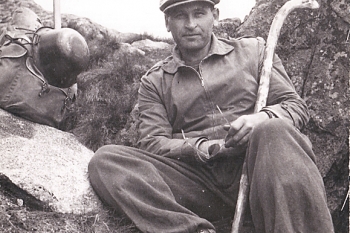
As we mentioned earlier, that time, along the way of taking care about religious brothers, Don Beňo took care about young, to fulfil his salesian mission in a new way. Let speak one of them, today university professor Ing. Eduard Bublinec, CSc: ‘When I was a student at University in Zvolen, I got to know underground Church, it fearless administrator that time was young salesian priest Ján A. Beňo or ‚uncle Janko‘..... He and group of salesians around him kindled light and lifted the torch of faith in a difficult time of hateful communist atheism. In Jun 1956, I was a member of unforgettable retreats in Low Tatras. It finished at night raid of secret police in Demänovská dolina. Don Janko and assistant Lajko saved themselves escaping through flooded river Demänovka and hide themselves in a spruce wood. We were OK thanks to their self-sacrificing.‘ (Our Community, 2002/11, Parish Office, Zvolen). When ‘the air was clean’ we walk or run fifteen kilometres to Liptovský Mikuláš where everybody was safe.
Don Beňo supplied retreats in nature not only with his priestly services, but in the beginning, with taking care about everything. He found suitable place, made shopping, cooked and served…
Until the end, he was a leader, who wanted to be example in everything, in all his spiritual effort the same as in manual work and services. He had a principle that he taught other priests: ‘Let’s do selflessly as much as we can, to say with st. Paul – I do not own anything to anybody. Do not ask from others what we did not give.’ According to his example, others took care of different services in different occasions.
This kind of retreats were not only a strong experience and adventure, but especially big spiritual development and strength into future life for its members. At the end, around the fire, Don Beňo spoke to them in these words: ‘Insurgents of all times were sitting like this. We have also become insurgents, to prepare upheaval, by our daily small fights, in our souls and souls of those who did not realise that we are God’s and therefore permanently sieged… These flickering flames are symbols of that fire which brought Christ to this world; and our night vigil is manifestation of readiness to bring God’s fire everywhere where darkness, cold and death of sins is… We are solders, solders ready to fight because the world attacked God – not that who is in Heaven, that one is unreachable, but that one who lives in our hearts… There are souls strong as a stronghold there God will stay. But there are also souls that God has to run out of them…
It is war, therefore, there are injured and dead. Some are falling sick because of bad example; others because they are cheated by the policy of enemy; or they are pulled down by their own weakness. Moral falls are not isolated. We live in society as trees in the forest, which cannot fall to do not damage those who are the closest ... And this obliges us to be strong us much as to be capable of holding falling brothers, if necessary. Only such strong Christians, who have a faster step, brighter face and smile wider than the Communist Komsomols, who have more blood than socialist martyrs, more courage, kindness and selfless love than sectarian preachers, only these will restore Christ’s lost positions... And that is a task, which no longer meet elders and young do not understand yet... It is our turn... Who has courage, who loves God, reach out and stands between us firmly, without fear...
Fires have been burning in our mountains; their light and numbers have been growing and our hope for victory with them.’
This spirit brought Don Beňo everywhere he went, to young brothers and to others that did not want to be robbed of faith and were willing to strengthen it in others. Inspire of the consequences that he was aware of, he said: ‘Many went to prison only because they were priests; if they imprison me, I hope it won’t be for anything.’
As we mentioned before, he worked as a labourer on a building site. They employed him in a town and a company where they could watch him. Despite of his carefulness and resourcefulness that he used in all his apostolic activities, his activities did not stay hidden. After one year and nine months that Don Beňo spent in employment, he felt that ‘a circle around him went smaller.’ On 7 October 1955, he was arrested in Zvolen near old petrol station. The next day they searched his parent’s house in Prestavlky; and two days later, his flat in Zvolen, where they repeated it twice. First, at both places, they confiscated whole spiritual literature and notes, then typewriter, and at the end camera with all equipment for production of photos.
Then, he went through thirteen months long custody in Banska Bystrica, Bratislava at “Februárke” and Prague at Pankrac. They tried to convince him of deeds that they knew from tracking and statements of informers and others imprisoned. They threatened him that if he do not say things, they would interrogate many of his brothers. They made up a situation where he stood in front of a big dilemma. He got consolation in the knowledge that he said only things that they had known before. He knew that we should not lie, and also it is not worthy. A man would need incredible memory to memorise everything what he said in a few months, and information did not contradict each other. In any difficult situation, the main reason against the lie is Christian duty to give testimony about the truth – because according the God’s Will, he is in that situation to give the testimony. In any circumstances, a Christian can say only the truth or be silent. Since that time he kept this rule until the death.
It is not known that Don Beňo complained, or informed somebody, about the way of tormenting that he certainly went through in the custody. What he went through there he took with him to the Lord, to Who he certainly immediately offered everything.
On 5 July 1956, Regional Court in Bratislava sentenced him to three years in a prison with the statement that he was the most active member of the sentenced group of brothers.
He was staying in the custody because the whole group appealed to the Supreme Court in Prague. Under the influence of events in Hungary in 1956, the Supreme Court decided that the convicts did not do crimes for which they were sentenced by Regional Court, because they acted according religious freedom that is guaranteed by Constitution.
On 24 November, after the liberating court session held on 14 November, were almost all from this group released. Among them was director of Salesians in Slovakia Don Bokor. When they were in a train, director Don Bokor thanked them for what they did and suffered for the Congregation. Among others things he said: ‘I am proud of you, and we will go further as you have gone up to now.’
The enthusiasm did not last long. The development of events in Hungary predicted a new storm here. In this situation Don Beňo in a letter encouraged Don Bokor after the first signs of reversing - that there is no need to be frightened immediately. Don Bokor replied to Don Beňo that he should keep his Paul’s nature, but he has to be Peter in this situation. Therefore, he asks obedience from him, and forbids him to meet brothers.
It was not easy for Don Beňo, not becouse of himself, but as he said and testified many times in deeds, he had great love to Salesian Congregation. He saw that in the youngest generation is endangered the future of Salesian Congregation if there is not provided effective assistance.
He believed that also there God had his plan. He was not responsible for formation of brothers, therefore, he had more time and could return to youngsters with those who helped him. Young were waiting for his services that he provided before he went to prison.
Worries of superiors about what the future would bring were fulfilled. On 19 Jun 1957 the Presidium of the High Court cancelled the verdict of the High Court in Prague form 14 November 1956, and asked them to accomplish their punishment that the Regional Court in Bratislava on 5 Jul 1956 sentenced them. Don Beňo went to Hradec Králove and then he went to Valdice in the North Bohemia.
Here he met Don Andrej Dermek who was a school mentor in Sv. Kríži. Under his leadership he could continue studding theology. This older brother was lecturing him during compulsory walks at a prison courtyard. Czech priests Kolář, Malý and Don Beňo taught phylosophy younger Czech salesians Čuřík, Chudár, Topina and others. They were not allowed to have a pencil and paper in the prisson. They wrote notes from lectures on toalet paper with a stem of an apple or a match dripped in apple juice. When it dried it was darker and they could read it. Then they sat for exams. Their gratitude for good study results belongs to Holly Spirit that blessed their heroic effort to prepare well for their future priest service.
Don Beňo remembers his staying in the prison in these words: ‘I often celebrated Holly Mass because I knew one Latin canon by heard. Communion waffles were crumbs of bread and vino we made of dried fruit that was sent to us by a wife of academic painter Ladislav Záborský. We took raisins and put them into water for twenty-four hours. When they swollen and fermented we had vino. Holly Mass we celebrate with folded hands, in one bottle of medicine was vino and in rolled cigarette paper were crumbs.’ One time a superintendent found out that he celebrated Holly Mass.
He went to a seclusion room for ten days where he got food only each third day, and he could sleep only on concrete without a blanket.
In summer 1957, Don Beňo got permission for her mother to come to see him in the prison. This visit lasted only short time and they could talk in the presence of the superintendent. Don Beňo’s relatives Lojzko Mastný came with the mother. He was a secret salesian cleric that was from Trubin, a village next to Prestavlky. When Don Beňo greeted his mother and said a few words, he blinked on her and she understood that she should engage the superintendent’s attention to allow Don Beňo to talk with Lojzko about salesian’s interior things and give some advice and warnings. For the Kingdom of God, mother and son sacrificed a short meeting that the prison rules allowed him, for which she travelled long distance.
As he was studding theology, he was also thinking how he would better fulfil God’s will, how he would better respond to present needs when he returns from the prison. In the prison, a magazine that undermined religious meaning of the books in the Bible was in library. There was written about the Song of Songs as about a collection of poetry of human nature. How to defend that there is God’s message? Don Beňo got into the inner poetic structure of this work with the help of Heglo Poetics. He made conception of his biblical interpretation as a relationship between God and human soul where the devil make intervention. Short time after his return from the prison, he wrote the book, it has become a kind of poetic ascetics that was understood especially by young.
The academic painter Zaborský, who was involved into production of this book by Don Beňo when they were in the prison, gave this testimony: ‘They let us worked together for a short time with Janko Beňo at Valdice, we washed and wiped glass after glassware. He gave impression of calm and contented man. Even he smiled. That time he told me that he is thinking a lot about interpretation of Song of Songs, and he asked me whether I would illustrate it, if he publish it. I promised it to him. I made the last correction of pictures sometime in 1989… In the prison, they did not let us together for a long time, to do not become so good friends. I always had very good filings about him. He was a kind of man who inspired others to deeper thoughts, and he also lived very spiritual life. I admired his peace and wisdom. Difficulties and situation that he experienced he took as from God’s hands. Also therefore, he could everything evaluate calmly…’
In the prison, in addition to Song of Songs, Don Beňo outlined, in mind or ‘in secret writing’ on toilet paper, next pieces: Pedagogy and overview of Old Testament following New Testament His Hand, Palm and Fist.
On 14 Jun 1959, Don Beňo as thirty-seven years old was released. Shortly before that, he unexpectedly but in God providence met the provincial Don Bokor in the prison cinema. Don Bokor did not cancelled the prohibition to meet younger brothers, but he adjust it in that way that he could contact those who would come asking for his services.
Although, Don Beňo returned home in worse health conditions (stomach ulcers), love for God’s Kingdom and for souls led him to work with not smaller zeal. He was not one of those who chose to be passive or so called careful, in fear to do not return to prison again. For these cases he had an argument that this virtue is possible only in very dangerous activity…
Therefore, after his return from the prison, he made use of permission of provincial to continue formation of younger brothers. In addition to that, he in cooperation with some brothers and sisters and risking their lives stood in touch with groups of youth and adults from Pezinok, Bratislava, Nitra, Levice, Zvolen, Martin, Košice; even more, he travelled to Prague where he kept contact that he made during his staying in WTC.
He found employment in wood company Šášovské Podhradie, he worked as wood labourer. He worked more in winter to safe vacancy for summer spiritual program. He was a woodcutter, he planted trees and dug gutters, or climb the trees and collected seeds for nurseries. Sometimes he jumped from tree to tree and at work often sang. But due to his health condition the work in the forest was not easy. In March 1961, he had to undergo surgery, after which he has only a third of the stomach. In spite of it, he did not stop his ardent work for God’s Kingdom. A group of young remembers that during certain retreat in Pezinok forest, his swollen wound suppurated and dressing had to be changed every day.
After his return from the prison he had to find accommodation. That problem had to be solved by myself, he said. In 1963, after obtaining planning permission, he started to build a house on their land in Prestavlky. There he wanted to live with his mother and received visits. More-less, he build it by himself. He had obtain building experiences at WTC and in Building Industry. The house was a result of God’s Providence and love of people who helped him financially and on the building site. Don Beňo returned from the prison with debt of 6000 Kcs for accommodation and food that was supposedly caused by ‘failure to meet performance standards’. That was lots of money for that time, wood labourer was paid around 400-500 Kcs monthly. He was paying mentioned debt and without other debt he finished his house in two years. He was saying: ‘We made debt and God will pay it. If we first search for God’s Kingdom than we can lay down our concern to the Lord and He will provide.’ Don Beňo lived this and advised it to others.
It is interesting that the building of ‚his earthly mansion’ in 1963-1965 corresponds with the beginning and end of the big future event in the Church that was the II. Vatican Council.
Don Beňo watched it with big interest. He remembers it in these words: ’It was difficult to get some news, to publish something about it in Catholic Herald was strongly forbidden. It happened that newspapers Work published ten lines as bishops argued there and nothing else.
A source of the news about Council were magazines smuggled by a certain nun under her habit from Vienna. I got hold of an official Vatican newsletter L’Osservatore Romano that brought a weekly news what the bishops agreed on. I had the latest news, and I informed others priests and lay people about it during the Council sessions’.
Considering that Don Beňo could follow the session of Council, shortly after the end, he could write a short paper (the first in Slovak) about all important topics of Council and how Holy Spirit worked there through people. When he asked his older brother Don Valábek to censure this paper with the topic II Vatican Council, he wrote only one note: ‘Ján, you do not need to write Deo gratias! At the end of the each capitol.’ These author’s words were expression of an enthusiasm for Council that accurately express some reality in the Church, which there always were but they needed to be put into practice. Council that shows Church as an organism and stress its holiness. Holiness that need to be achieve by permanent purifying its members, therefore, Council put God’s Word into people’s hands and ask them to put it into practice. Council that makes available the richness of liturgy for the same goal. Council that build on the testimony of lay in the world because they have access to every place.
All these reality lead Don Beňo into great gratitude towards Holy Spirit, because they were a light to the future and confirmed his past and maybe little bit revolutionary – spiritual and apostolic effort.
After completion of the first informative brochure, Don Beňo tried to make a shorter and more accessible text of council documents. He had written commentary to five council documents (apostolate of lay called Yes, Lord; about renewal of priests’ life Brothers, it's Time; about renewal of consecrated life Put on the New Man; about media Proclaim the Good News; and about ecumenism That All May be One).
The first post-conciliar years in the Church were marked by effort to get together with all similarly thinking people, who were working in silence at different places for the sake of the Kingdom of God; to get informed, to orientate and to do more together. When in 1965 after fourteen years in prison, two well-known laymen were released, MUDr. Silvester Krčméry and RNDr. Vladimíra Jukla, Don Beňo made contact with them. They enriched spiritualy each other and made plans tougether.
In 1968 the political situation in the country temporally changed, everybody who was imprisoned for religion were released, and religious life went out of underground. So-called Model of Council renewal was founded in our Church; its constituent assemblies were a kind of tribune where everybody could say what he/s suffered and what should be done in the future. Don Beňo took part in these meetings which promised that in the religion domain would be opened wider opportunities to work than it was up to now. However, everybody was woken up from dreams of restoration of old times by Russian panzers that had occupied our country and brought back last regime. It was necessary to go back to previous position.
During a relative freedom that was prolonging, Don Beňo with people who started to build a community around him bought a few cottages in mountains, which were suitable for meetings and especially retreats. Lukáš Kráľ from Martin said about it these words: ‘It 1968 Don Beňo came out with suggestion to build a cottage for retreats in a valley of Veľká Fatra near Martin. We had started working on it without hesitation and helped to builders and joiners. Thanks to enthusiasm the building progressed quickly even some works such as transport of big rocks on a hillside through a creek were done very primitively. He was a soul and manager there… Our relationships went stronger, we had known each-other very well. The cottage became a small place for retreats of youth, families, clerics and priests from whole Slovakia. All the time, it was under Gods protection’.
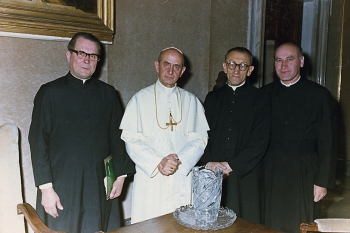
Whole summer in 1968 he spent in services for young and adults in this environment, then a course after course during vocation in 1969. The topic of his retreat Three prodigals was necessity of conversion. At the beginning he reminded that they were invited there by God. He said:’ Certainty of my mission I build on words from my ordination, a mandate of superiors and blessing for all past and future actions that I had received from the representative of Jesus Christ on my own request (Pavol VI.) at a personal visit on 4 January. Therefore, if God invited me here, he gave me a task that I have to fulfil. Believe me, it is not simple, it is not comfortable to stroll from place to place the second decade, while I feel my own deficiency to stand as a teacher of Israel in front of you, and to hear my own conscience medice cura teipsum – a doctor cure yourself, and be careful as St. Paul says ‚having been announcer myself, I should not want to be disqualified‘(1 Cor 9, 27). There is also one proclamation of this Apostol: ‘I should be punished if I did not preach it! ‘(1 Cor 9, 16). And it push me to speak to you despite of my deficiency.’
There was always familiarity at these meetings. His principle was that if participants do not make a family during three days, the retreat did not serve the purpose. Even he had individual approach and was faithful and persistent in personal contacts with those who he guided spiritually, he tried to build a community, Church where Christians felt as in family.
These retreats were characteristic by sincerity of participants and conversion to life with God. Those who attended them remembered it after forty years as something wonderful. Maybe some of them forgot the topic, but they remember what they experienced there: happiness of conversion, community, God’s love that was personified in Don Beňo.
One of the participants said this about it: ‘It was at private cottage in Kremnické vrchy. It was after well know events in 1968. We all were dejected because our hopes for spiritual revival of our country were demolished. We came to a retreat to Don Beňo with this feelings, but a few days later, after his influence, we were thinking differently.
I saw Don Beňo the first time in my life, but I did not have a problem to talk frankly about my life. He paid attention to all of us, he cared for everybody. We were convinced about necessity of permanent conversion and work on ourselves. Under the influence of Holly Spirit and Don Beňo we had got courage to live Christian life in the most difficult circumstances. I with my wife went to him for spiritual guidance until his deaf. Deo gratias.’ (Jozef Kremnický, st.)
In 1968, in the period of political liberalization, secretly ordained priests could asked for state consent for working officially as priests. After long time Don Beňo had got it as one of the last, supported by signature of 500 believers. He got it from 6.10.1969 to 30.4.1970 as chaplain in Prestavlky, but after its termination on 23.1.1970 it was cancelled. In this occasion Don Beňo in the letter to District Council in Žiar wrote these words: ‘As far as I am concerned, I am used to all kinds of treatment in the last twenty years. Lack of information or even twisted information that always produced mistrust, and it stood at the beginning of inhuman treatment with man, many times completely innocent.’
Don Beňo tried to do everything to get permission to work as a priest, as it demanded the Code of Canon Law, therefore, he tried to get state permission in Trnava archdiocese. There he got permission, and on 7 April 1970 he had become a chaplain in Topolčany and two months later in Jacovce. There he stayed until the state permission was taken from him again on 14 Jun 1971. That happened because he worked with youth and families and it was not acceptable for those who took the state control of Church. In this case his appeal did not helped.
During his official pastoral work, he served to all, who under his influence wanted to live deeper Christian life, and that time his health condition (stomach, pancreas, stroke, heart) went as bad that on 9 December 1971 he was given full invalid pension because of his chronic pancreatitis. After this, Don Beňo returned to his house in Prastavlky, where he continued the work for benefit of souls, the work that got more and more specific forms.
That time, Don Beňo had prepared the first cycle of meditations about Gospel called The word of God. It has a form of homilies that he prepared for himself and others priests during his public pastoral work. These homilies he enriched by reports of members of group, who read and meditated the Gospel every day.
After this cycle, lots of spiritual writings followed. He characterised the way of his writing and talking about dogmas in these words: ‘Church in the II Vatican Council asks us to return to Scripture in life, theology and homilies. In the effort to fulfil its wish and our need, we will leave theological abstractions, our present heavenly dialect that is hardly understood by modern people, and we will preach this retreat topics by clear language – Gospel language.’
The first cycle of retreats that Don Beňo prepared was focused on personal conversion, according to parable of a prodigal son. Next retreats were focused on the main objectives of Council, which was Church and belonging to it, thus the topics were about baptismal, conformational and personal specific vocation. After this, the three main topics followed: the Scripture, pray, fraternity and triennial presence of Christ among us.
These topics came out of need to express reality that a grooving group around Don Beňo started to live as their specific spirituality.
The spirituality was based on morning meditation that sprang of personally addressed God’s Word and lead to a resolution for each day. Also, individual spiritual guiding in a style of St. Francis of Sales that was based on monthly brotherly meetings where a person was openly talking about own spiritual and material affairs.
How did it happen that among young and older people was formed a specific group? Don Beňo remembers it like this: ‘Yearly retreats were not sufficient. We came to the conclusion that after some time the relationship with Christ weakened. We were thinking what to do. Wasn’t be good to meet from time to time? If somebody turned to me with this need, I replied yes, come. This gradually turned to spiritual guiding. Later, every month more people came the same time and we could have monthly spiritual revival. And then I suggested to them – what if you yourself meet once a week? And what if you daily read Gospel and in the evening revise your day… How did we start? We grew one by one, naturally as in a family.’
Don Beňo made more frequent contacts with those who showed personal interest. This factor was an evidence that the Lord works with his Grace in them, and the God’s will is to take individual care of them. Individual care because each one is different, each one is at different lever of attachment to God, each one God leads on different way, and therefore, each one needs different approach.
Thus the community started. It started to form of those who happily and responsibly accepted the Gospel, and trust and charity that sprang out of it. Thus the family of spiritual brothers and sisters was formed of those who had their Father in the Heaven, but He was also present between them personally in His representative, a priest Jon Beňo.
Some of his salesian brothers were as his co-operators involved into taking care of youngsters. They were especially young diocesan priests, who were taken away the state permission to work as a parish priests because of this work among youth. Apart from groups mentioned above, there were groups of single girls around Don Beňo, who wanted their lives consecrate to God in apostolate for young. This group of girls become the third part of the whole group.
That time, the Director of Salesians in Slovakia, Don Dermek, made him responsible for starting formation of brothers. Don Beňo in this position advised to form them for work among families, to go to youth through their parents. All according to paragraph 29 of their constitution, where parents as co-operators of salesian priests, according Don Bosco preventive system, become the most natural and the most competent assistants of their children. He advised them this according his current experiences. Against this positive and tested proposal, the Council decided that despite of their apostolic influence was not without problems, Salesians in Slovakia will work for Don Bosco’s youth, abandoned boys and salesian’s destinataires.
The variety of opinions to who their work should be address in those specifics circumstances, whether to pay attention to exact words of constitution or to spirit, finished in a new restriction for Don Beňo. The provincial asked him to destroy what he (Don Beňo) introduced in formation of young brothers with the help of Don Beňo’s group of salesian co-operators (actually, from the beginning, Don Beňo considered this group as a part of salesian family, the group formed in salesian spirit that consisted of higher number of families, twenty diocese priests and around the same number of single girls).
Don Beňo accepted this, and after this, he led around twenty brothers in the last stage of formation towards priesthood in a style as the provincial asked him.
There was a question, what to do with a group that was formed around Don Beňo, whose members felt vocation to apostolate for families and youth. Can Don Beňo continue this work when his superior has doubts whether it is Salesian? What is God’s will? What God wants of him? On one hand, not clear position. On the other hand, enthusiasm and belief in need and correctness of this form of apostolate among those who have been around for years and worked and suffered in a similar spirit. And finally, fruit was already here, although small in a number, but still clearly seen fruit.
Don Beňo was never ambitious. He always waited that God would show him direction. He knew that who wants to do a thing very quickly, cannot be sure that it is God’s will, or that it is not only personal ambition.
The signal from God for him were significant needs of those whom he served, and forming opinion that this kind of work is the most effective in the present. Later it turned out that Don Beňo became an instrument of the Holy Spirit in bringing alive new charisma.
The big light and an assurance was a visitation of vicar of the major director of Salesians in Rome Don Scrivo in 1978. Although Don Scrivo said that in this new form of apostolate are some ambiguity, but he called it ‘ottima via‘, perfect way of salesian work.
In September 1978, the provincial of Salezians in Slovakia called him of the formation young brothers, therefore, Don Beňo could spend all his time in mentioned work. Outwardly it might appear as displacement, but in fact the Lord had His plan. There were new serious rules in front of him.
The work went bigger, and priests who were involved in it would not be able to serve to all in the future, especially in providing spiritual guiding. Among youngsters, who got to a deeper spiritual life in this group were also vocation for priesthood, and they wanted to continue in this work. The hope that they would be accepted for only one seminary in Bratislava was minimal, and to get among salesian clerics did not guaranteed opportunity for future priests to work as they felt to be called.
In 1980, after Don Beňo via two polish priests informed Rome about the situation. He had got a guidance (just verbally, according current situation) to form a secular institute of the priests with permission to bring up future priests due to preparation for apostolate among families. It was a great gesture and assurance that God really wants this work. It started immediately. When Don Beňo was sure about something, he started work without delay and with consistency. All three parts of the group (priests, families, single girls involved in apostolate) were in some way involved in preparation of the future priests. The fruit of this collective effort was fourteen new priests who were ordained in next ten years.
In the same year, there was another visitation from Rome. It was regional adviser Don Severen. This visitation brought confirmation of this work. The visitor even agreed that five salesian brothers would help to Don Beňo in this multilateral activity.
New difficulties came into peaceful and happy development of this work. In 1983, it was interrogation among forty members of this group that finished in eight hours interrogation of Don Beňo by the State Police. A year later after this, mostly false and negative information about the work of this group, so called ‘benovci’ in the Church in Slovakia, came to cardinal Tomašek in Prag and at different places in Roma (State Secretariat, the Major Director of Salesians). Don Beňo, personally and through his closed co-operators, could make dialog about it at all mentioned places. But he did not stay at this stage. He asked members of his group to examine their conscience and remove all possible mistakes that could stimulate those reactions from outside. In spite of their honest effort, the shade of misunderstanding for this work stayed here. The members accepted this situation humbly as a cross that God sent to strengthen their vocation to selfless services that were accompanied by big sacrifices and significant risks (two diocese priests were imprisoned for this work, one conditionally sentenced, many others lost the state permission for pastoral work), and to trust in God not in people. They did not weakened in the service but were stimulated to more zeal.
Don Beňo was asked by Don Vigano, the current major director, whether he did not want to be freed of religious vows, for leading him initiated work. His reply was that he was a Salesian and he wanted to die as Salesian. Don Vigano appreciated his work and took pride in it. He allowed Don Beňo to exclusively devoted himself to it, while maintaining certain bond with his own community, which were regularly monthly meetings with the brothers, as well as reporting on the activities to his Provincial. That situation remained until the end of his life.
In 1989 the regime in Slovakia changed. In January 1990, Don Beňo was invited to State Srcretariet in Vatican to submit information about the Work that was known and had its supporters in Bohemia, Poland and Bulgaria, later on also in Ukraine and Rusia.
After archbishop mons. Francesco Colasuonno was aware of the situation, he recommended Don Beňo to apply for legal recognition of three parts of the Work that was shortly called movement Nazareth. By the Church and its founder it was called the movement because the group had those signs in modern history of the Church. It was called Nazareth because its main goal was apostolate of families that was inspired by Nazareth Family.
When the Church hierarchy was established in Slovakia, movement Nazareth got church-legal recognition in the diocese of Banská Bystriaca during 1991 and 1993. In 1996, the secular female institute Betania, which was one part of the movement Nazareth, was canonically accepted.
There was one more very important factor which assured the funder of the movement Nazareth, that good direction of the Work was not only temporary solution during totalitarian regime, but modern society requires the movement in what so ever circumstances.
In 1990, during the first visit to Czechoslovakia, in the cathedral St. Vit in Prague, the Pope Jon Paul II said also this: ‘Build a church of free life of the Church, not returning to what you were before they robbed you of freedom, but build it on what you have matured during persecution.’ The effort of Rome and the local Church to give ecclesiastical approval to the movement Nazareth was in full conformity with this pope’s wish.
All the time from invitation to Rome and establishment of the Church hierarchy in Slovakia, Don Beňo tried to be in contact and make dialog with Vatican and bishops in Slovakia and abroad where was the movement present.
The result of cooperation with Congregation for secular institutes was an abstract for constitution of female secular institute Betania. With help of Congregation for Institutes of Consecrated Life, Don Beňo could write constitution for Private International Association of Families by pontifical right. In 1998, the Pontifical Council invited the founder and members of the movement Nazareth, along with fifty two other movements from around the world, at the First World Conference of Movements and the meeting of movements with Holy Father John Paul II.
At this time a definition of specific charisma, which the Holly Spirit gave to the movement and local universal Church through Don Beňo, crystalized. It is radical prevention in up bringing a man. According to it, formation of human being starts long time before its conception by evangelization of future parents, there is radicalism of prevention in dimension of time. Then spouses and parents seek mutual unity by radical living of Gospel. And since the birth, they bring up their children according its principles not only for this Earth but also for the Heaven. It is radical prevention that consists of widespread and consistent application of Gospel in life.
Both above mentioned Roman dicasteries warned to Don Beňo, during their mutual contacts, that his role as a founder is a charisma protect, develop and spread. After several reminders of his obligations, Don Beňo felt responsibility for it not only as an internal pressure through his conscience, but as direct obedience to the highest places in Rome.
In the years 2002 – 2004, Slovak Bishops' Conference (SBC) repeatedly studied the movement and its charisma and wrote objections. At that time, Papal Council for Laity wanted to improve dialogue between SBC and the movement Nazareth by its verbal comments to the founder. Suggestions, that from Roma and those from the speech of Mons. Rudolf Baláž to priests of movement Nazareth on 27 August 2004 in Badin, Don Beňo accepted and put into new Formation program of lay movement Nazareth in 2004 that is binding for life and work of all its parts.
This shows how Don Beňo applies his life credo, only ‘one necessary’ in Christian effort: to find and fulfil God’s plan in requirements and suggestions from above and in obedience to superiors.
In January 2005, after issuing two annulment decrees of diocesan bishop of Banská-Bystrica and subsequent appeal of the founder to Roma, Papal Council for Laity confirmed diocesan approval of Association of Families Nazareth in 2005. At Pentecost in 2006, Don Beňo together with a group of members were invited to the second global meeting of Holly Father with ecclesial movements and new communities, where movement Nazareth was publicly presented.
Don Beňo was well aware why Council strongly emphasized the role of media in evangelisation, and therefore, he calls for the creation and spreading, and he had been an example from the beginning. His spiritual creation was not based on some kind of his personal hobbies but it came out of needs of others. We know that he was aware of need to give people something that would encourage people to live their faith. He tried to put aside theological abstractions and let to speak the Gospel.
He preferred written text than audio and video record.
As we mentioned before, he wrote his first brochures as a student of physiology and theology (Four wheels, August Czartory, Echoing of Fathers Words), that time he also translated Caelestie from French. During his staying in WTC he wrote a book for young people The Day by Day. When he was responsible for young salesian brothers, he wrote a text book of philosophy for them. During the totalitarian regime young people were also reading this book because they found there answers to arguments so called scientific atheism and dialectical materialism. The book was copied by typewriter, later it was published in two editions in SÚCM in Rome and in 1991 in Slovakia. It has become a popular study tool not only for youth but also for seminarians. Don Beňo later wrote thesis about Don Bosco's spirituality according author Auffrayho, it is called Follow the Safe Leader.
After 1959 when Don Beňo definitely came out of the prison, he pictured events that he went through from 1950 and his effort to keep faith and vocation in a book Rehabilitation. The title is taken from the motto of the book which is: ‘Silenced Church is Church that let to be Silenced.’ But for its rehabilitation is enough that not whole Church was silent. When one of his fellow prisoners read this book said: Janko, but you wrote it in time distance from everything bad and horrible happened.’ ‘No Don Dermek, I wrote it immediately after I came out of the prison...’ ‘Light tone and subtle humour of this book is evidence that he took everything from God and he did not reproached those who collaborated with evil, but he forgave them in hope that onetime they could change.
Then he wrote around fifty shorter spiritual accounts, catechesis and different spiritual orientations. When first tape recorders were available, he made audio books where texts were accompanied by music. His beginning of making audio records he remembers in this words: ‘When I with Janko Mikeš bought first Hungarian audio recorder Terkel (later we called it verkel), we asked few specialist to teach us how to operate it. We had only microphone, speaker and the door in reproduction room, which I opened a closed when I needed to make music more or less intensive.
Many times I made records until late evening. One time when I was really tired, I put a tape which was already recorded into the audio recorder. There was recorded Council. Two days’ work was in veins. I had to start again but it was possible after I got calmer. I laid down in front of the Lord. In this position I asked him for new blessing of my work. I thought that maybe because of somebody it must be recorded little bit differently, something different to be stressed, differently express…’
A few years, Don Beňo made recordings by himself, until he could passed this work to others.
An important part of his writings were spiritual exercises. Apart from a few, they form a single unit under the name I believe and confess. Sequentially, in the most essential points, they administered the truth of Creed, and how to put them into practice.
In this biography we have already mentioned his efforts to acquaint others with the Council, and to develop his commentary to some of its documents. In total he wrote six papers: II. Vatican Council;, Yes, Lord; Brother, it's Time; Put on a New Man; Let All be One; Proclaim the Good News.
Maybe the most famous meditations to the public are that were typed and later published in Slovak Institute of Saint. Cyril and Methodius (SICM) in Rome under the pseudonym (Mon Calepino A. Faudenom, Silvester Bajan) and since 1990 under his own name. First, there were already mentioned books The day by day; The word of the Lord; later, Say the Lord, your servant listens; thanks to the dedication of SICM in Rome they were published in a few editions and later some of them in foreign languages (in Czech, Polish, Russian, Ukrainian) abroad. In addition, for needs of the movement Nazaret, Don Beňo prepared meditations called Fragments (the last adjustment made back in 2006) and Your word, Lord, is Spirit and Life. He also wrote a commentary to Song of Songs that was issued under the same name.
When publishing Don Beňo liked to use his pseudonym because he knew that writing would come to a reader more easily. His critics and opponents often used his books for sermons unknowingly that he was the author. He was happy because he did not seek his honour and praise, he only want to spread God’s Word.
In his books he was dealing with issues of matrimony, family and parenting in the context of Don Bosco’s preventive system and council’s documents mainly exhortations of Jon Paul II. Familiaris Consortio. There are around ten of them. The most known are: About Parenting; Parents Come for a Litle Talk; Talk About Family; Word for Married (they were also published in Polish, Russian and some of them in Ukrainian), in Slovakia they had approval of Slovak bishops.
In 1970s Don Beňo met Jozef Ondrej Markuš from Levice, preacher emeritus of Brethren Church. Don Beňo found a brother in him. The brother who loved God’s Word and desired to spread it. His collection of sermons from the Holy Scripture arranged into thematic units were spiritual food and asset for the whole group, especially units from Old Testament. Mr. Mikuš often said that Holy Scripture is written ‘of life and for life.’ They shared this approach to God’s Word. Mr. Mikuš appreciated willingness of members of Movement to help him to edit his work. Ecumenical cooperation was developed. Don Beňo himself decided to prepare his sermons of Gospel for publishing. They were published under the title My thoughts about Him and us.
If we want to briefly summarize a life, and describe a personality of Don Beňo, we say that the Lord chose him to encourage brothers and sisters to read God’s Word daily, and daily practice what they red. Furthermore, the Lord through the efforts of this priest wanted to shape a community of those who would live according to God's Word. Community - Church as family, where everyone will know and help each other to this goal, which is Christ. To became true Christians through acceptance of the Church teaching and sacraments, as well as through individual spiritual accompaniment. In his apostolic work, Holly Spirit led him to focus on a family where new Christians are born. The inspiration to form new generation of Christians through upbringing and versatile help to parents, Church recognised as a specific charisma and gift of Holly Spirit to Universal Church. It was the same with hundreds of others founders of movements around the world. The group of those who want to live this charisma with God’s help was called Nazareth.
Don Ján Augustín Beňo, faithful to this charisma and founder the movement Nazareth, lived all his life in responsibility for the gift that God gave to him, that he had to find at first and then developed. He felt that for the spreader of charisma, this gift is a heavy burden. It is gift not for him but for others around him. It bring lots of responsibility, humiliation, tribulation but he cannot do otherwise for his inside pressure of responsibility. Don Beňo was saying:
‘If I was not certain that it is a God’s thing, I would leave it long time ago.’
In accomplishing this responsible task, many of Don Beno‘s personal quality were revealed. In the first place diligence that was accompanied with big effort and unbelievable endurance. According testimonies he showed this quality back up in his childhood then as a teenager and when he was preparing for his vocation. He used each minute for Heavenly Kingdom. Even in a WTC and prison he found a corner where he studied or wrote and cared for others. After he returned back home form the prison, he worked very hard manually in his civil profession, but he had days when he finished preparing spiritual food in the morning. He had many health problems with stomach, pancreas, heart, liver, grey eye haze of both eyes, 90 % loos of hearing of both ears that lasted for few decades and complicated communication. He had a motto: relax as much as necessary, work as much as you can. However, even that necessary relax he often did not have. He could not miss planned meetings even he felt very badly and worked when he felt strong pain. In the middle of 1990s, when he had grey eye haze in high stage that he could not read, he did not give up work at editing the first edition of the meditation Odrobinky. His sister who look after him red paragraphs and he dictated her edited paragraphs. It certainly required lots of effort and concentration. Even in that situation he did everything as he did before, people who he met did not noticed this his health problem.
He always focus on what the Lord expects in a present moment. When he moved from one work to another, or after he said good bye to somebody else, he shortly evaluated what he did correctly, what he could do better, what condition that person is in, how he could support him in the near future. When he everything gave to God, he returned to work that he should do that time. Only in this way he could harmonize many duties, motives and actions. He often repeated famous proverb: Keep the order and order will keep you. He worked mentally and physically. He mentioned that as a birth is made to fly a man is made to work – it/he declined without it. He worked until the end. Last months before his death he sawed the trees by a chainsaw, he advised during work in difficult terrain where he moved with difficulty. He liked working with wood even he did not have lots of strength at the end.
At the beginning of August 2006, when his health condition rapidly declined and he felt that the Lord is cooling him, he put all his energy to spiritual exercises for priests of the movement. After it, he continued regularly meetings with them to past the charisma to them. When one of the sisters from the institute Betania asked him whether he would go to relax for a short time, he said:
‘Relax? No. I will work.’
It is obvious that his life did not end in bed, when he got up he made few steps, slipped on his knees and breathed his last in arms of a priest, as a true slesian that will relax in Heaven.
He always tried to give ‘food to his tribe at the right time’ he fulfilled his king and shepherds’ ministry with perseverance and diligent work.
He tried to care for souls with salesian loving assistance. He cared that in addition to for hard work and discipline, family spirit should live everywhere. He shared his life, experiences, future plans with others. He listened to others with interest, gave advise and encouragement. Because of his friendliness, it was difficult to live – sometimes visitors stayed until midnight.
He was not only a shepherd but also prophet. Because of his thinking in context and in connection with some kind of God’s intuition, he could acknowledge things in its reasons and results earlier than others. He could see situation on time and clearly, show the best way that was necessary to go, as well as to predict spiritual danger that could be fatal if there would not be a medicine. The medicine was always to stick to Gospel as it is, in all its reality.
He always called things by its true names. He did not incline to diplomacy to do not cause problems himself or to others. He was aware of the fact that only the true can help and save as. He said:
‘If we would not stick to God’s Word, His True and His Commandments, we would not be here long time, we would broke up and nothing would stay after us.’
To fulfil this prophecy, cost him a lot.
In his case, here can be said about the third authority of each Christian and that is priesthood. He offered to God all his physical suffering, but mainly spiritual and mental. In addition to necessary inner effort that got out of his responsibility, he suffered lots of humiliation, disappointment, misunderstanding even unfriendliness, but he did not lose esteem and love for those that prepared him hard time. He was aware of the fact that the way to fulfilment of God’s will is narrow way of the cross that is necessary to carry with Christ. God’s love that is giving Himself to the last prevailed in his life.
Half an hour before his death he was putting is hands up as a priest does during a holly mass, and even they were falling, he was putting them up again and again. He prayed thus with his eyes turned up, and all his life with all happiness and suffering gave to the Lord. Reconciled with God and people he received the last sacraments and peacefully gave his soul to the Lord.
We go back to the words that we started this short biography. Also, before the end of his life Don Beňo often repeated what he lived. He was saying: ‘It is Lord, the God that make plans, it is up to as to join in and help ourselves and to others to safe a soul. Because of this attitude he always received God’s orientation on time that brought him into charisma, the gift of the Holy Spirit for whole Church that as we believe many will find as a way of personal holiness.
The Lord called Don Beňo in the morning on 21 September 2006. It is understandable that it happened on the holyday of St. Mathias Apostol that Don Beňo was connected with the same desire to spread the Gospel, and also it is not a coincidence that he was buried on the feast of St. Pia from Pietrelciny, a great martyr for God given mission.
As the salesian provincial Don Turanský at the funeral said that Don Beňo‘s life will be reviled in its fullness in the future. Don Turanský expresed a convinction that the history will have to say whole truth and review work of this exceptional priest.
We strongly believe that words of Gospel that say: ‚Those who have istructed many in virtue will shine sa bright sa stars for all eternity.‘(Dn 12,3) will be fulfiled also on Don Beňo.
Pontifical Council for the Laity, 23. 9. 2006: ‘Immediately as we get the news about departure of Don Beňo to the Father, our dicastery has been praying with salesian community and movement Nazareth, encouraged by his testimony of Christian and Church maturity.’.
Msgr. Miguel Delgado, director of the Office of Papal Council for Laity, 26. 9. 2006 – ‘I am sure that Don Beňo will help you from Heaven even more. Last time we met on 3.6.2006 during II. International Meeting Church Movements with Holy Father. I saw him very content and happy that he could attend this event.’
H.Exc. Msgr. Csaba Ternyák, AR bishop, secretary for the clergy, 17. 1. 2007: ‘We are deeply saddened by the loss of Don Beňo and we will include him in our prayers.’
H.Exc. Msgr. Ján Sokol, AR bishop of Bratislava-Trnava AR diocese, 23. 9. 2006: He greeted all gathered at the funeral, through his secretary Mons. Ferdinand Javor, and said that he was with them in his pray.
H.Em. Card. Péter Erdö, Archbishop of Esztergom-Budapest, President of the Episcopal Conference, President of the Council of European Episcopal, 22. 9. 2006: ‚The virtuous will shine like the sun (Mt 13, 43). I was distressed when I received the message about the death of Don Beňo... I pray for consolation of the Holy Spirit for his followers.’
H.Em. Card. Péter Erdö, Archbishop of Esztergom-Budapest, President of the Episcopal Conference, President of the Council of European Episcopal, 19. 10. 2006: ‘An unusual and respectable personality of the uncle Don Jan impressed me when I first met him. He encouraged me establish a Catholic University.’
Msgr. Luc van Looy, SDB, bishop of Gent, Belgium: ‚When I was in Rome a member of The main Salezian Council and vicar or the rector major, a few times I was thrilled to meet beloved Don Beňo with his priests and co-workers. Don Beňo was always a man of the church, he was faithful to the church. He suffered because of approval of his movement but he always tried to inform the church authorities about his plans. When he talked about his problems with local bishops, and when he was going to Vatican offices, he reminded me Don Bosco. How often had to Don Bosco go to Roma to get approval of his plans?
Don Jan was a free man, always spiritually interested in people who he led, but he did not lack a sense of humour. His book Song of Sons always filled me with happiness. This piece is a monument of spirituality and express his great spirit and presence in God.’
Msgr. Ján Szkodoń, auxiliary bishop of Krakov, 23. 9. 2006: ‘The news about his death tuch me deeplyand, and I am spiritually with you. I send a condolescence to priests, girls and families.‘
Profesor Jan Niemiec, the rector of Hrodk seminary, Ukraine, later the auxiliary bishop of Kamensko-Podolsk diocese, 23. 9. 2006: He send condolence from his military ordinary and said: ’I am graciously thankful to the movement Nazaret that they opened hearts to Don Jan, and allowed God to speak to your hearts and conscious through him, and that you came to Ukraine…
Let God rewards you the great work that I could touch in a special way in Hrodok seminary.’
Don Adriano Bregolin, vicar of the rector major, on behalf of the rector major, 23. 9. 2006: ‘I have received the news about a death of Don Jan Beňo…Let as prey the Lord to receive everything good that he did in his life.’
Don Štefan Turanský, the rector of Slovak Salezian Province, 23. 9. 2006: ’Personally I think that when things get calmer, the history must say the whole true and review the work of this exceptional priest.’
Don Štefan Turanský, the rector of Slovak Salezian Province, 24. 9. 2006: ‘I am convinced that the whole true about miss understanding between him and the church leaders will be reviled
after some time when emotions get calmer, prejudice and facts will be measured according an objective criteria...
Don Beňo certainly played a key role in certain historical moment. We are grateful to him for it. God will take care about the rest.